Custom Web Application Development
Custom Web Application Development for Workflows That Outgrew Spreadsheets
Usually it starts with a spreadsheet that five people edit, a form that emails someone, and a weekly report pieced together by hand. A custom web application replaces that with one system: the right people see the right data, actions are recorded, and the report builds itself. I design and build these apps end to end, from the database model and permissions to the screens your team uses and the server they run on. My usual stack is Next.js and React on the front, Node.js or NestJS APIs behind them, and PostgreSQL or MongoDB for data.
What I Build
Internal tools and customer-facing apps for businesses with a specific way of working: records, permissions, approvals, reports and the integrations that connect them.
- Admin panels with create, edit, search and bulk actions
- Client or partner portals behind secure login
- Role-based permissions: who can view, edit, approve or export
- Dashboards and reports built from your real data
- Integrations with payment gateways, CRMs, email and third-party APIs
- Data migration from spreadsheets or an older system
- Deployment to a VPS with SSL, backups and process management
- Documentation and handover so another developer can pick it up
Technologies
- Next.js
- React
- TypeScript
- Node.js
- NestJS
- PostgreSQL
- Prisma
- MongoDB
- REST APIs
- Nginx
Problems I solve
- • Operations running on spreadsheets nobody fully trusts
- • Off-the-shelf tools that fit 70% of the process and fight you on the rest
- • Staff copying data between three systems by hand
- • No record of who changed what, or when
- • An old internal app that only one person knows how to fix
Development process
Step 1
Map the workflow
Walk through how the work happens today: who does what, which data moves where, and where it breaks. This becomes the data model and the list of screens.
Step 2
Build in working slices
Each milestone ships a usable piece (login and roles, then the core records, then reports) on a staging server you can click through, not a slide deck.
Step 3
Launch, migrate, hand over
Move existing data across, deploy to production, and leave documentation on setup, environment variables and how the codebase is organised.
Related work
Selected projects that demonstrate relevant capabilities. Full case notes are available where published.
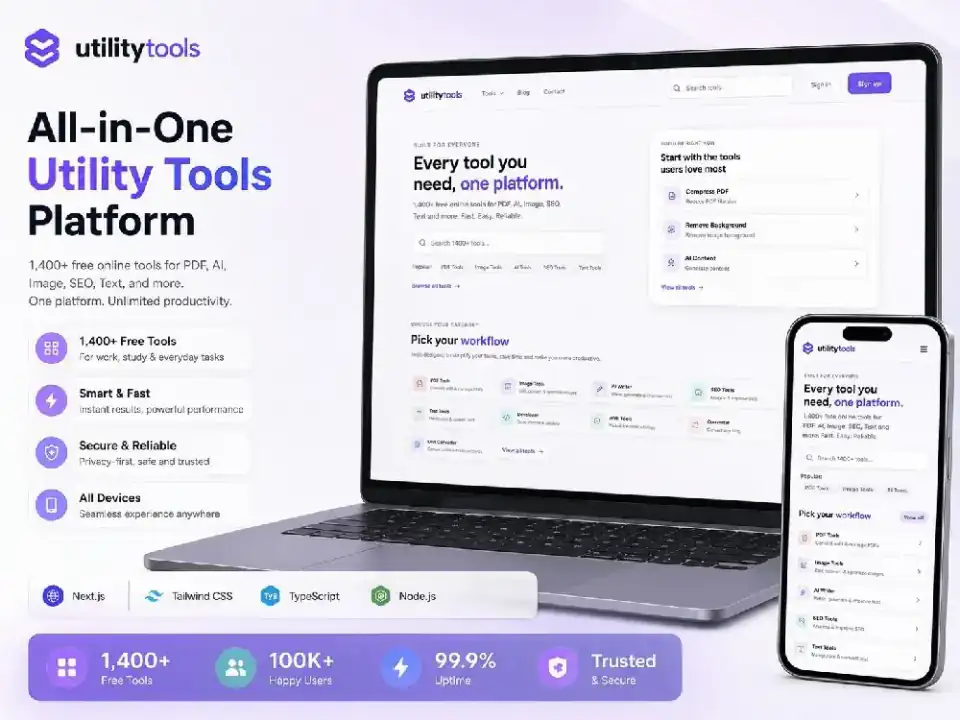
UtilityTools
Production SaaS-style platform with 1,400+ free online tools for PDF, AI, image, SEO, text and developer workflows.
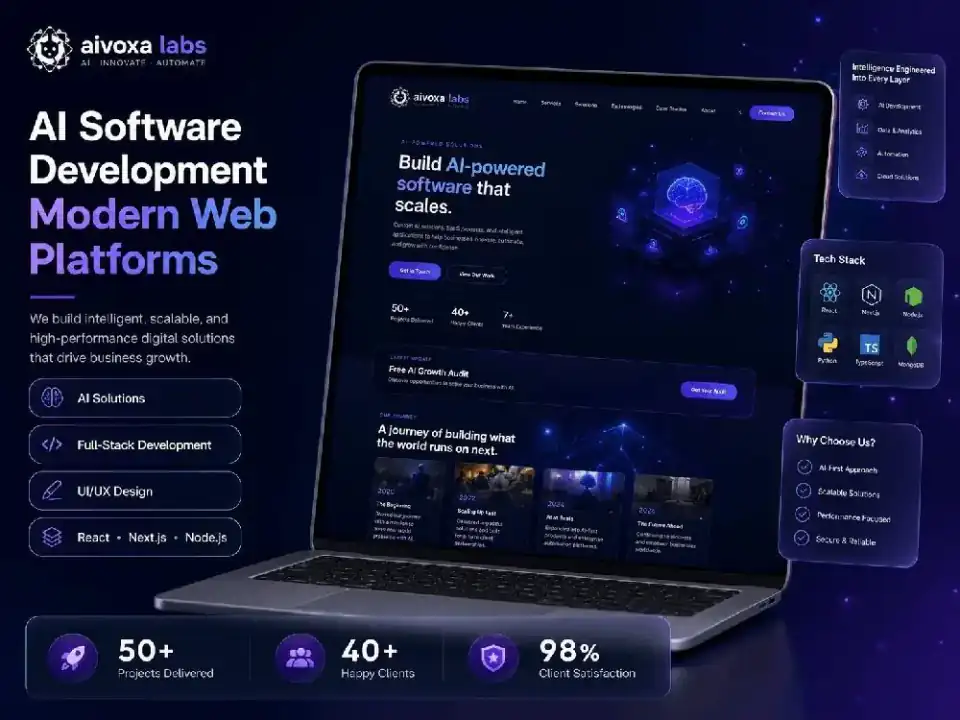
Aivoxa Labs
Business website for an AI and software development studio — services, case studies, technical SEO content and lead capture.
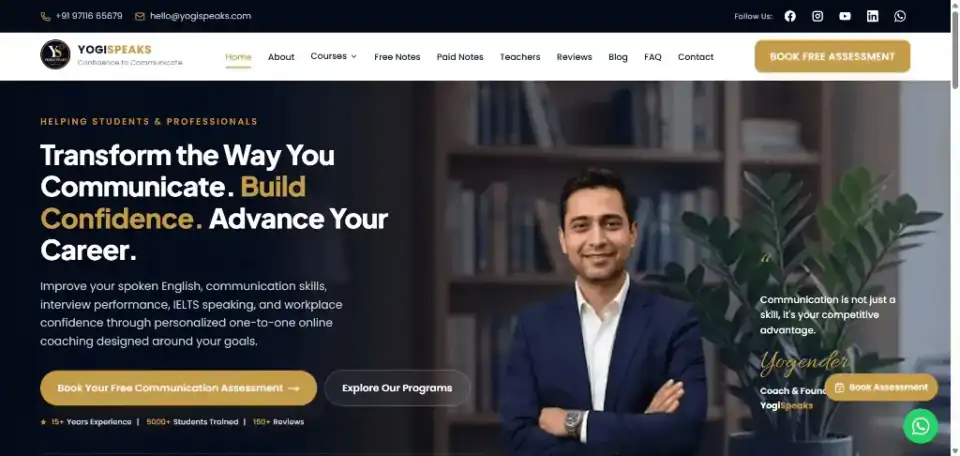
YogiSpeaks
Education and content platform with centrally managed teachers, free notes, paid notes and public website content.
Why work with me
The person who maps your workflow is the person who writes the database schema, the API and the screens, so requirements don't get lost between a sales call and a dev team. Based in India; working with businesses worldwide. After delivery, you own the project files and source code handed over unless otherwise agreed.
Frequently asked questions
When does a business actually need a custom web app?
When the process is specific enough that ready-made tools force workarounds, or when data lives in several places and people re-type it between them. If an existing tool covers your process well, I'll tell you. Custom software has an ongoing maintenance cost and should earn it.
How is this different from your SaaS MVP service?
An MVP is for founders testing whether a product has users, so scope is kept as small as possible. A custom web application is for a business that already knows its workflow and needs software staff will rely on daily, so permissions, audit history, data import and reporting matter from the start.
What have you built that's similar?
YogiSpeaks: an education platform with an admin panel for teachers and notes, free and paid content tiers, and NestJS APIs on Prisma/PostgreSQL. UtilityTools: a Next.js and Node.js platform with authentication and a large tool catalogue, deployed on a VPS. Both public sites are offline while hosting is updated; the case studies describe what was built.
Can you take over an existing internal app?
Often, yes. I start with a short code and infrastructure review to see what state it's in, then recommend whether to stabilise and extend it or rebuild specific parts. A full rewrite is rarely the first answer.
Who owns the code and the data?
You do. The code lives in your repository and the app runs on hosting in your name, with credentials handed over at the end of the project.
How is a project like this priced?
By scope, after a discovery call. The number of user roles, integrations and how much existing data needs migrating move the estimate more than the number of screens. You get a milestone-based quote before any build starts.
Related guides
Practical articles that support this service—written for business owners and technical stakeholders.
- What a business admin panel needsRoles, audit trails, search and the screens teams use daily.
- Building a full-stack app that scalesData model, API boundaries and deployment decisions.
- REST API integration guideConnecting CRMs, payments and internal tools safely.
- PostgreSQL vs MongoDBChoosing a database for structured business data.
Start Your Project
Share your requirement for a free project estimate. Staging review and clear handoff are part of how engagements are delivered.